
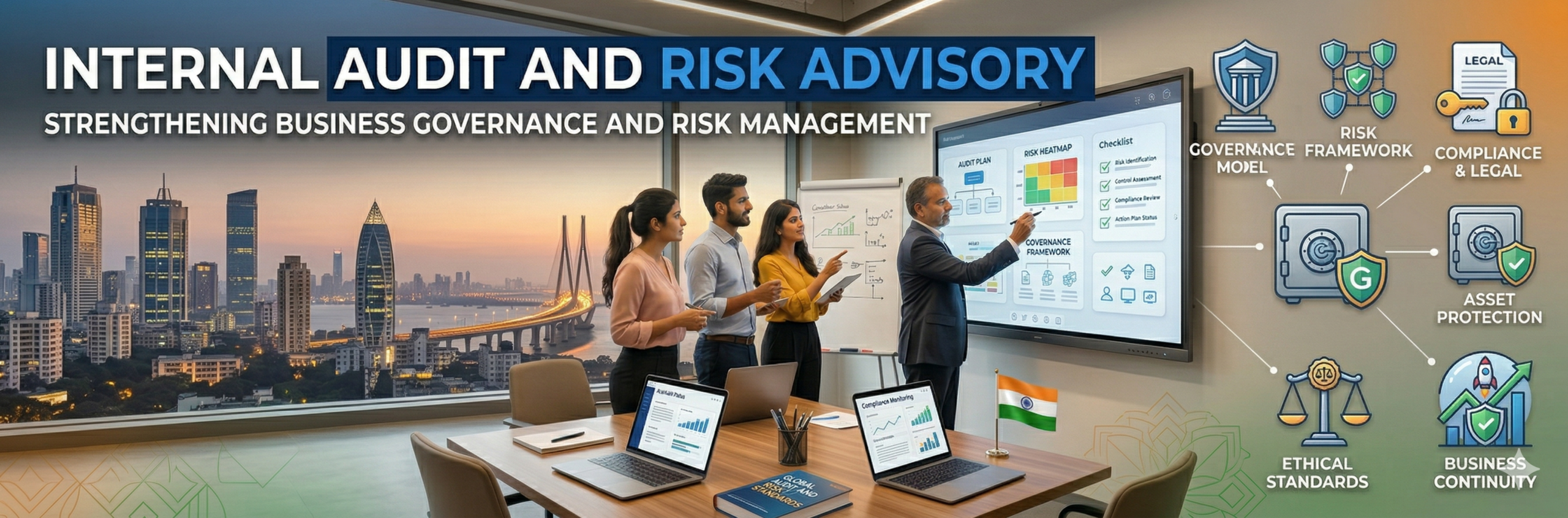
Internal Audit and Risk Advisory: Strengthening Business Governance and Risk Management
In today’s dynamic and competitive business environment, organizations face a wide range of operational, financial, and regulatory risks. To maintain transparency, efficiency, and compliance, companies rely on effective monitoring systems such as internal audit and risk advisory services. These services help organizations identify potential risks, strengthen internal controls, and improve decision-making processes.
Internal audit focuses on evaluating an organization’s internal processes and controls, while risk advisory helps businesses identify, assess, and manage potential risks that could impact their operations. Together, they play a crucial role in ensuring strong corporate governance and sustainable growth.
This article explores the meaning, importance, and key functions of internal audit and risk advisory, along with their benefits for modern organizations.
What is Internal Audit?
Internal audit is an independent and objective evaluation of an organization’s internal operations, financial reporting, and control systems. It is conducted by internal auditors or independent professionals to assess whether the organization’s processes are effective, compliant, and efficient.
Unlike external audits, which focus mainly on financial statements, internal audits examine a broader range of activities, including operational processes, risk management, and internal controls.
Objectives of Internal Audit
The primary objectives of internal audit include:
- Evaluating the effectiveness of internal control systems
- Ensuring compliance with laws and regulations
- Detecting fraud, errors, and operational inefficiencies
- Improving risk management practices
- Enhancing organizational performance and governance
What is Risk Advisory?
Risk advisory refers to professional services that help organizations identify, analyze, and manage potential risks that may affect their operations, finances, or reputation. Risk advisory professionals work with businesses to develop strategies that minimize risks and strengthen internal control systems.
Risk advisory services are particularly important in industries facing regulatory complexity, technological disruption, or financial uncertainty.
Key Areas of Risk Advisory
Risk advisory services typically cover several critical areas, including:
- Operational Risk Management: Identifying risks related to daily business operations and improving operational efficiency.
- Financial Risk Management: Assessing risks associated with financial reporting, investments, and financial decision-making.
- Regulatory Compliance Risk: Ensuring that organizations comply with applicable laws, regulations, and industry standards.
- Technology and Cybersecurity Risk: Protecting organizations from cyber threats and technology-related vulnerabilities.
- Strategic Risk Assessment: Evaluating risks that could affect long-term business strategies and organizational objectives.
Importance of Internal Audit and Risk Advisory
Internal audit and risk advisory services provide several benefits that help organizations operate effectively and sustainably.
- Strengthening Internal Controls: These services help identify weaknesses in internal control systems and recommend improvements to prevent errors and fraud.
- Enhancing Corporate Governance: Effective audit and risk management practices improve accountability, transparency, and ethical business conduct.
- Risk Identification and Prevention: Organizations can proactively identify potential risks and develop strategies to mitigate them.
- Improved Decision Making: Reliable information and risk analysis support better strategic and operational decisions.
- Regulatory Compliance: Internal audit and risk advisory help ensure compliance with legal and regulatory requirements, reducing the risk of penalties.
Key Differences Between Internal Audit and Risk Advisory
Basis | Internal Audit | Risk Advisory |
Purpose | Evaluate internal controls and processes | Identify and manage potential risks |
Focus | Review of operations and compliance | Strategic risk assessment and mitigation |
Approach | Examination and evaluation | Advisory and risk management strategies |
Scope | Internal processes and financial systems | Broader organizational risks |
Although they have different focuses, both functions complement each other in strengthening an organization’s governance framework.
Role of Internal Auditors and Risk Advisors
Professionals involved in internal audit and risk advisory play a critical role in maintaining organizational integrity. Their responsibilities include:
- Reviewing financial and operational processes
- Identifying potential risks and control weaknesses
- Conducting risk assessments and internal audits
- Recommending improvements in governance practices
- Monitoring compliance with regulations and policies
These professionals help organizations create a culture of accountability and continuous improvement.
Future Trends in Internal Audit and Risk Advisory
The field of internal audit and risk advisory is evolving rapidly due to technological advancements and changing business environments. Some emerging trends include:
- Use of data analytics in auditing
- Automation of risk monitoring processes
- Increased focus on cybersecurity risk
- Integration of artificial intelligence in risk assessment
- Greater emphasis on ESG (Environmental, Social, and Governance) risks
Organizations are increasingly adopting modern technologies to enhance the effectiveness of audit and risk management functions.
Conclusion
Internal audit and risk advisory are essential components of effective corporate governance and organizational sustainability. While internal audit focuses on evaluating internal systems and controls, risk advisory helps organizations identify and manage potential threats to their operations and strategies.
Together, these services enable organizations to improve efficiency, strengthen compliance, and make informed business decisions. As businesses continue to face complex risks in an evolving global environment, the role of internal audit and risk advisory will remain critical for ensuring long-term success and resilience.